
 BACK TO OUR BLOG
Why hydronic systems lose performance—and why upgrades don’t have to mean new boilers
Hydronic heating and cooling systems rarely fail overnight. More often, they give you months or years of warning through small performance losses: uneven temperatures, recurring air problems, noisy piping, relief valves that weep, or pumps that seem to work harder every season. From a facilities perspective, those symptoms show up as hot‑and‑cold calls, frustrated occupants, and maintenance staff stuck chasing comfort complaints instead of getting ahead on proactive maintenance. The good news is that you do not always need a new boiler or chiller to turn things around. In many buildings, the most effective improvements are targeted upgrades and better repair parts planning.
At The Part Works, we look at hydronic systems the same way your maintenance team does: as the combination of where the hot or chilled water comes from and how it moves through the building. That means paying even more attention to pumps, valves, separators, and vents than we do to boilers and heat exchangers. It also means focusing on upgrades that make systems easier to control, easier to maintain, and faster to repair when something fails. Summer and early fall are often the best times to tackle these projects and stock up on replacement parts before heating season exposes every weak link in the system.
Pressure Control
A natural starting point is pressure control. In a closed hydronic system, stable fill pressure is the foundation for stable operation. If pressure is too low, upper floors may never get enough water, and pumps can cavitate; if it is too high, relief valves lift, expansion tanks operate outside their range, and small leaks start to appear at gaskets or valve stems. Older or poorly adjusted pressure‑reducing valves (PRVs) are a common culprit. They may have been set years ago when the building configuration was different, or they may have drifted over time due to debris. Upgrading to a modern, serviceable PRV is one of the simplest ways to stabilize your system.
Caleffi, for example, makes PRVs designed for accurate pressure regulation, quiet operation, and easy in‑line service. From a service perspective, the best part is that Caleffi's PRVs use a removable self‑contained cartridge that's easily swapped out, no rebuilding required. A visible adjustment knob and lockable setting make it easier for technicians to dial in the correct fill pressure and keep it there. For most facilities, standardizing on a small family of PRVs gives you both better control and a straightforward replacement path when existing feed valves fail.
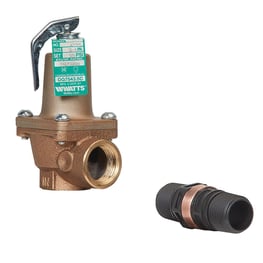 Pressure control also ties directly into system protection. Relief valves and expansion tanks are your last line of defense against overpressure. Products like the T&P relief valve, boiler pressure relief valve, or your potable expansion tank are not glamorous components, but they are essential to safe operation. Making sure these devices are correctly sized, properly installed, and either the originally specified brand or a properly specified alternative, along with periodic testing, are basic but powerful sanity checks. Keeping the correct matching spare relief valves, gauges, and expansion components in your stockroom is a relatively low‑cost measure that can prevent expensive downtime.
Key Takeaway: Proper pressure control, combined with correctly sized and maintained safety components, helps prevent equipment damage, leaks, and unexpected downtime.
Air Management
Right alongside pressure control is air management. Trapped air creates a long list of problems—noisy piping, cold radiators, accelerated corrosion, and difficult start‑ups after shutdowns. The industry has invested heavily in improved air elimination devices because of the significant improvements they provide in system behavior. Spirotherm, for example, has built its reputation around coalescing‑type air eliminators and dirt separators. Eliminating air and dirt reduces many routine maintenance tasks, saves energy, and improves overall 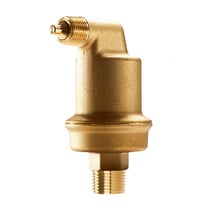 system performance. Their patented Spirovent and Spirotrap products use internal media to scrub microbubbles and particles from the flow stream, allowing these contaminants to separate out in a low‑velocity chamber (Spirovent Air Eliminator Overview). For day‑to‑day facility work, that philosophy translates into a mix of central and point‑of‑use devices. In addition to any larger separators your system may have, high‑quality automatic vents at key locations make a noticeable difference. The air separator devices help keep air from accumulating in risers, coils, and terminal units.
Key Takeaway: When you combine better pressure control with better air elimination, the entire hydronic loop becomes easier to fill, balance, and keep quiet and responsive.
Upgrades that clean the water, stabilize flow, and modernize control
In many commercial buildings, the hydronic plant grew organically over time: a boiler replacement here, a new pump there, extra tees and strainers added whenever a project needed “just one more connection.” On paper, it is a primary–secondary system. In the mechanical room, it can feel like a maze. When the water is clean and the flows are balanced, the maze still works. When air, dirt, and magnetite accumulate, it becomes harder to maintain stable temperatures and troubleshoot what is going wrong. That is where a new generation of multifunction separators and smarter control devices earns its place.
System Protection and Performance
Hydraulic separation is one of the most effective, least understood upgrades you can add to a hydronic plant. In a typical primary–secondary layout, the boiler side and the system side operate on different flow rates. Without a true low-loss header, those flows can fight each other: one pump overpowers another, boilers and heat pumps can hit flow switch errors, or certain branches never get the flow you thought they would. Caleffi makes a 4-in-1 separator, called the SEP4, designed to resolve that conflict while also improving water quality. The SEP4 effectively separates air, dirt, and magnetite, and, at the same time, the primary-secondary piping ensures that the boiler and distribution pumps are hydraulically decoupled, so each circuit can run at the flow it needs without pushing the other out of its operating range (SEP4 4‑in‑1 Hydraulic Separator). In this unit, the large diameter of the chamber slows the water so air microbubbles rise to the top, dirt particles down to 5 microns fall to the bottom, and a removable magnet captures ferrous debris and magnetite, leaving your maintenance team with straightforward cleaning and maintenance. Spirotherm, among others, also makes hydraulic separators and combo separator systems. The main benefit of a separator over a strainer is that it can accomplish all of these tasks while the water is flowing. A single SEP4 can replace a tangle of closely spaced tees, individual air separators, and side-stream dirt filters. That frees up wall space, doesn't require minimum lengths of straight pipe on the connections to work properly, and creates a clear “reference point” for technicians learning the system. Maintenance also becomes more predictable: you have one body to blow down, simple magnetic rods to remove without getting your hands dirty. Over time, that means fewer unexplained circulation problems, fewer fouled boiler heat exchangers, and fewer callbacks after other contractors have worked on the system.
Key Takeaway: Combining hydraulic separation with continuous air and dirt removal improves system efficiency, extends equipment life, and makes routine maintenance more predictable.
Temperature Control and Cleanliness
On the domestic hot water side, many facilities are facing a different but related set of challenges: how to maintain a stable temperature, manage Legionella risk, and control outlet temperature, while keeping the valve clean of scale, without overcomplicating the system or overwhelming staff. Traditional master mixing valves are still common, but they offer limited visibility and can't automate thermal disinfection routines. Caleffi’s LEGIOMIX platform is a unique example of how electronic mixing can simplify that picture. These valves use a motorized ball, temperature sensors, and a dedicated controller to hold mixed temperature tightly while also running scheduled thermal disinfection cycles and daily self-cleaning. For a hospital, school, or large public facility, that combination is powerful. You can keep storage temperatures high enough to support Legionella control, document that disinfection targets were actually met, and still deliver safe tempered water to fixtures without constant manual tweaking. LEGIOMIX also runs an automatic daily rotation or “self-cleaning” cycle that moves the ball through its travel range, helping to reduce scale buildup and keep the internal mechanism operating smoothly. From a maintenance perspective, that is as important as the disinfection feature because it extends the valve’s reliable life and reduces the risk of a sticky or drifting mixer becoming a hidden source of trouble.
Key Takeaway: Automating temperature control, thermal disinfection, and routine valve operation can improve safety while reducing maintenance demands.
Planning for Future Upgrades
Finally, when you talk about modernization, it is worth noting that some facilities are also considering equipment-level changes, especially on the domestic hot water side. Tankless platforms like Intellihot’s commercial line can help reduce standby losses and recover space by eliminating large storage tanks. Intellihot positions its systems as “smart hot water for next‑gen facilities,” with high-efficiency gas and electrical products designed for on‑demand operation (Intellihot Commercial Tankless Overview). Whether or not a full tankless or heat‑pump‑based plant is in scope for your current projects, it can be helpful to frame these options as part of a broader modernization roadmap:
 SEP4 and advanced air elimination improve water quality and flow stability
LEGIOMIX improves domestic hot water control and disinfection documentation
Future equipment upgrades can then build on a cleaner, more predictable foundation
Key Takeaway: Modernizing a hydronic system is often a phased process, with foundational improvements today making future equipment upgrades simpler, more efficient, and more reliable.
Stocking smarter: the hydronic replacement parts facilities should always have
Even the best hydronic upgrades will disappoint if your team cannot recover quickly when something fails. A circulator that locks up during the first cold snap, an automatic air vent that starts spitting, or a relief valve that opens on a long weekend can all lead to extended outages if you are waiting on a $50 part to ship. That is why a smart replacement‑parts strategy is just as important as the equipment you install. The goal is not to turn your maintenance shop into a warehouse; it is to identify the relatively small, high‑impact items that are inexpensive to stock but costly to wait for. A practical way to build that list is to think in categories that mirror real field calls.

Pressure Control
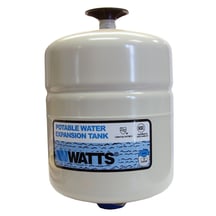
Start with pressure control and protection. In your facility, you might have Caleffi, Apollo/Conbraco, Watts, or a slew of other options. Consider key expansion components, such as a potable expansion tank. Together, those parts cover the most common failure points around boiler feed and safety: stuck or drifting PRVs, weeping relief valves, and expansion tanks that have lost charge or failed. Keeping at least one or two of each size that matches your installed equipment lets technicians restore stable pressure and protection without improvising.
 Air Management
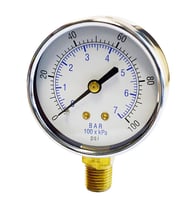
Next, look at air elimination and venting. Automatic vents are small and relatively inexpensive, but a failed vent at the top of a riser can cause ongoing cold complaints, noise, or corrosion. Stocking proven models from SpiroTop, Hoffman, Caleffi, or Maid‑O‑Mist gives your technicians reliable replacements for the exact styles they encounter in the field. Paired with a few quality pressure gauges, these vents turn many “mystery” comfort calls into simple swap‑outs that can be resolved in a single visit.

Service Parts for System Protection and Performance
Pump and terminal‑unit service parts are the next layer. For many facilities, it is not practical to keep full duplicate pumps on hand for every system. What is realistic is to stock the repair components that fail most often: cartridges and couplers for your standard 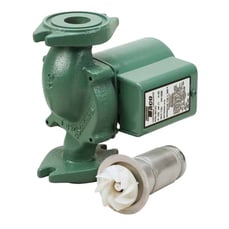 circulators. The Taco 007F circulator and its matching cartridge are common examples, along with Bell & Gossett style pump couplers. Having these on the shelf allows you to rebuild many pumps in place, often within a single shift, rather than waiting days for a complete replacement circulator.
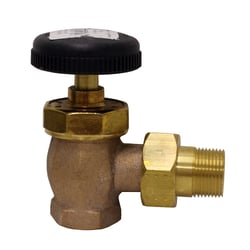 On the terminal side, radiator and convector service valves allow isolation of individual units for repair without draining entire branches or floors.

Stocking Strategy for Your Facility
The final step is to align this stocking strategy with how your team actually works. Use your facilities work order history to identify the hydronic parts that drive repeat work orders and emergency calls, then map those against your proposed stock list. Build simple bin labels that tie each part to typical failure modes—“PRV, low system pressure,” “vent, gurgling riser,” “cartridge, noisy circulator”—so newer technicians can quickly grab the right components. Partner with The Part Works to turn this into an electronic stockroom list or vendor‑managed inventory program, so replenishment is automatic, and your time is not wasted searching for the correct parts.
Key Takeaway: The result is a hydronic system that not only runs cleaner and more stably thanks to upgrades, but also bounces back faster when inevitable failures occur.

