
 BACK TO OUR BLOG
Restroom partitions rarely get attention—until something goes wrong. A dragging door, a loose hinge, or a damaged panel can quickly turn into downtime and frustration. This guide is built for maintenance teams, facility managers, and commercial contractors who need to specify toilet partitions clearly, keep projects moving, and source the right parts without trial and error. Inside, you’ll find straightforward, spec-ready language for new installations and renovations, along with practical repair terminology that makes parts identification and ordering faster and more accurate.
Spec it right the first time: Clean project quotes & installs stay on schedule
Specifying toilet partitions doesn’t have to be complicated, but it does need to be precise. Start with the essentials: layout, mounting style, panel heights, material, and key dimensions. Clear, accurate information allows your supplier to design and quote correctly and ensures your installer receives the right package, keeping the project on schedule. Early alignment also supports compliance with restroom partition standards, especially ADA requirements for stall width, door width, and clearances. Confirming accessibility needs upfront reduces rework, avoids delays, and ensures the partition system and accessories meet safety and code expectations.
|
Spec Item |
Common Options (Language to use) |
Why It Matters |
|
Standard stall |
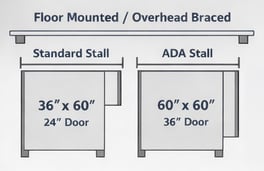
Typical standard stall is 36" W x 60" D with a 24" door. |
Sets expectations for layout and counts. |
|
ADA stall |
Include an ADA stall, typically 60" W x 60" D with a 36" door that opens out (often end-of-run). |
Keeps accessibility planning on track. |
|
Layout type |
An alcove/end stall condition (wall-to-wall end) is a common layout. |
Prevents mismatched end panels/returns |
|
Mounting style |
The most common is floor-mounted with overhead bracing |
Drives headrail/bracket package and structure |
|
Typical heights |
Typical: 82" pilasters, 58" doors and panels, panels 12" off the floor |
Keeps doors, pilasters, headrail consistent |
|
Material callout |
Options include steel, laminate, phenolic, solid plastic, stainless steel. Compare your needs based on visual appeal, durability and cleaning |
Material impacts vandal resistance, lifespan, thickness, and hardware fit |
Partition Vocabulary That Speeds Up Ordering
Downtime often comes from one issue: the part name isn’t searchable. Use these common terms when you call, text, or submit a parts request.
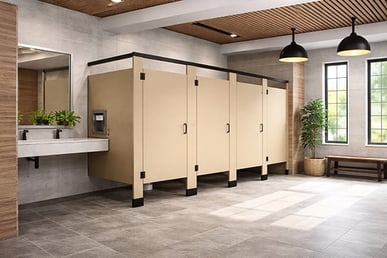 Partition Part Names:
-
 Door Pulls = Handle/pull hardware.
- Hinges = Hardware that lets the door swing.
- Striker / Keeper = The part the latch grabs onto.
- Pintles / Top Pins = Pivot hardware that keeps alignment.
- Brackets / Headrail = Structural rail + mounting hardware.
- Screws / Barrels = Fasteners (often tamper-resistant).
- Fix-It Kits = Bundled “common failure” hardware packs.
- Latches / Indicator Latches / Knobs = “Occupied/lock” + latch mechanism.
Common Restroom Partition Issues: How to Match The Right Parts
Most partition problems are hardware problems. The fastest fix usually starts with clearly describing the symptom and capturing the details that determine compatibility: door swing/handing, stile shape (square vs. rounded), and thickness.
|
What’s Wrong |
What to Observe and Note (So Parts Get Matched Faster) |
What to Request / Shop |
|
Door sagging, rubbing, or not closing cleanly |
Door swing (in/out) and handing (LH/RH) hinge style, loose/missing fasteners |
Hinges; Screws & barrels |
|
Latch won’t catch or won’t stay locked |
Latch type (slide/indicator/ADA paddle), door thickness, where it’s failing (latch vs keeper) |
Latches & knobs; Striker keepers |
|
Door “locks” but doesn’t align with the frame |
Misalignment at strike/keeper, door swing, stile shape (square vs rounded) |
Striker keepers; Hardware kits |
|
Panel or pilaster feels loose |
Bracket/headrail fit, wall/floor anchoring points, missing inserts |
Brackets & headrails; Partition accessories |
|
Doors slamming, wall damage, noise complaints |
Missing/worn bumpers or stops; high-traffic impact zones |
Door stops & bumpers |
|
Privacy complaints (gaps, sightlines) |
Where the gap is (door edge/pilaster), height (standard) |
Privacy covers; Partition accessories |

Material choices on new installs matter here too: partition materials (steel, laminate, phenolic, solid plastic, stainless) influence thickness and hardware fit, which is why clear specs and consistent parts matching prevent repeat calls.

If you’re tempted to “make something work,” pause and send us photos through our Text-A-Tech at (206) 900-9093, and we can help. A quick wide shot, plus a close-up of the failed part, can save a full cycle of wrong orders—especially on older stalls where parts from multiple manufacturers look similar.
Fix-It Kits: The Fast Way To Get A Stall Back Online
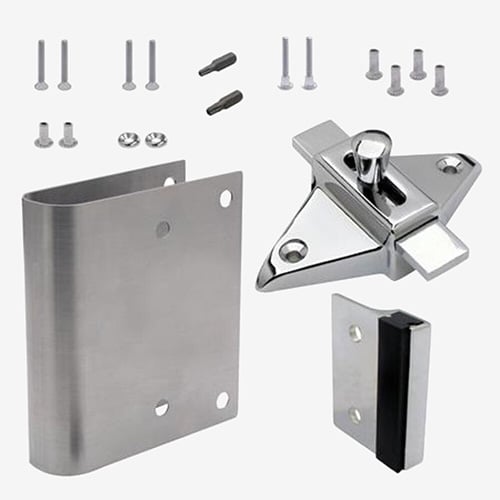
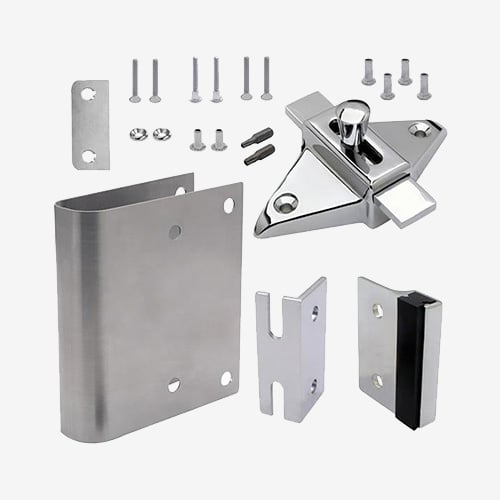
For high-traffic facilities, fix-it kits can be the cleanest approach because they bundle together the wear parts that commonly fail. The Part Works carries multiple door fix-it kits (including inswing and outswing options and square-edge vs rounded-edge styles).
Fix-It-Kit for Fast Repairs |
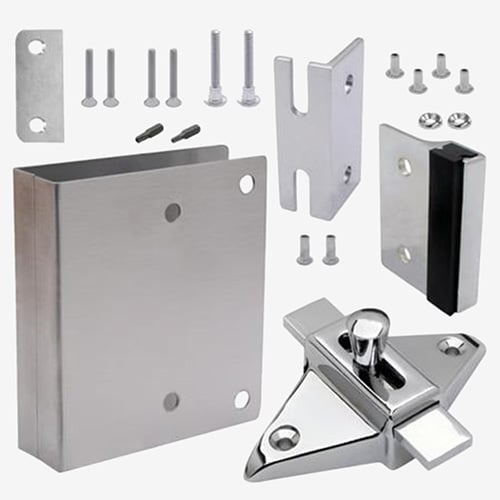
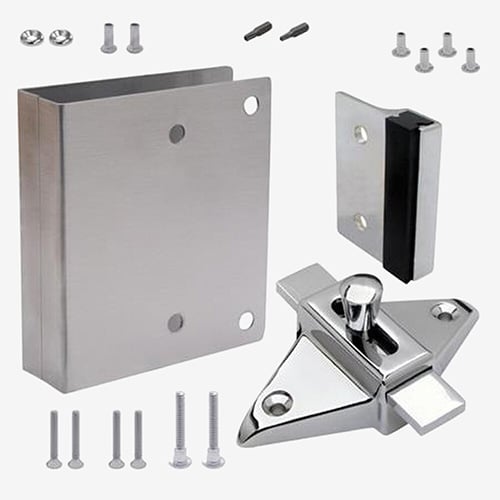
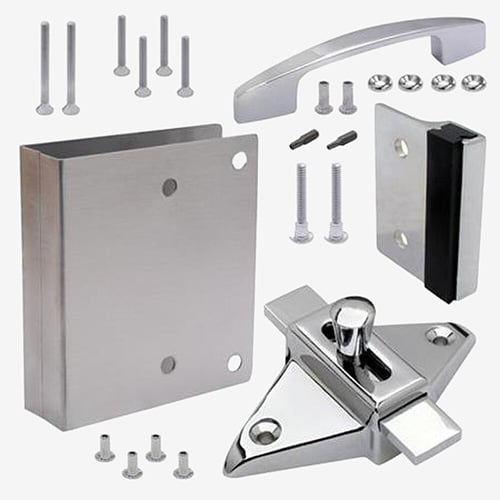
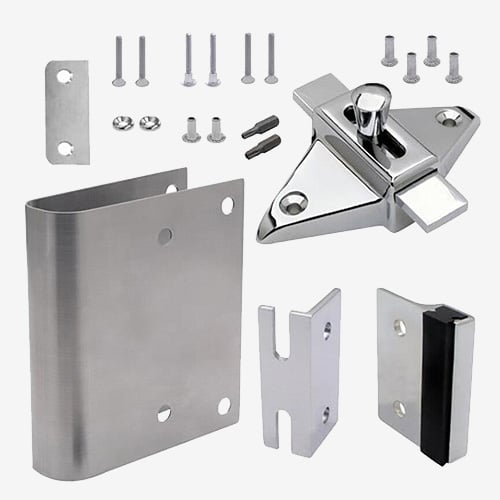
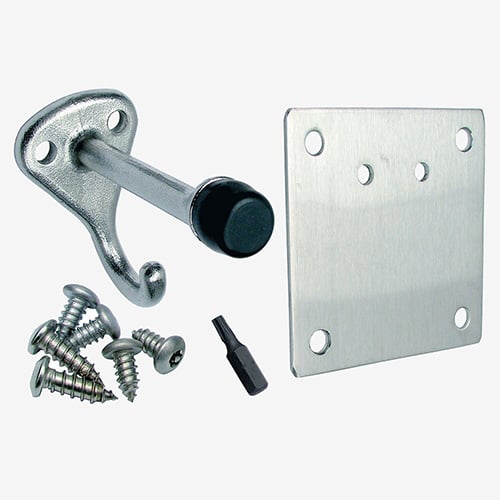
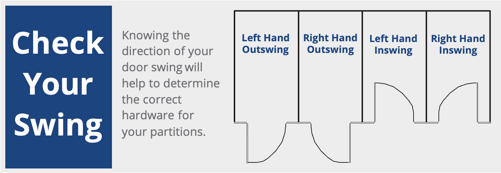
Tip for faster matching: reference the "Check Your Swing" diagram. Pay close attention to the inswing/outswing and left/right handing to determine the correct hardware set.
Best Practices for Managing Restroom Partition Inventory
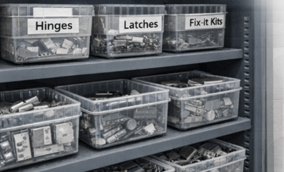
Most teams already have the basics (drivers, wrenches, pliers, a drill). The bigger time-saver is keeping compatible spare hardware on hand: commercial-grade hinges, latches, keepers, and the correct fasteners for your partition style, so repairs don’t stall waiting on parts. Inventory management is where good facilities become great facilities. When the right latch or hinge is already in your stockroom, a toilet stall repair can go from days to minutes. Many facilities use vendor-managed inventory (VMI) approaches to keep critical parts stocked and organized. It's a service many of our customers depend on us for.
|
Stockroom Bin Label |
Why It Prevents Downtime |
|
Latches & indicators |
Most common “stall out of service” culprit. |
|
Keepers/strikes |
Misalignment fixes often start here. |
|
Hinge sets |
Sagging doors kill usability fast. |
|
Screws/barrels |
Fasteners go missing; vandal resistance needs the correct hardware. |
|
Door stops/bumpers |
Small cost, big impact on damage and noise. |
|
Fix-it kits |
Fast response for repeat failures. |
|
Privacy covers / accessories |
Quick win when privacy complaints spike. |
The Easiest Upgrade: Accessories While You’re Already in the Restroom
If you’re refreshing partitions, you’re already in the “restroom experience” zone—so it’s the perfect time to replace worn accessories that users touch every day. The accessories make all the difference, and here is why they pair well with partition work.
-
-
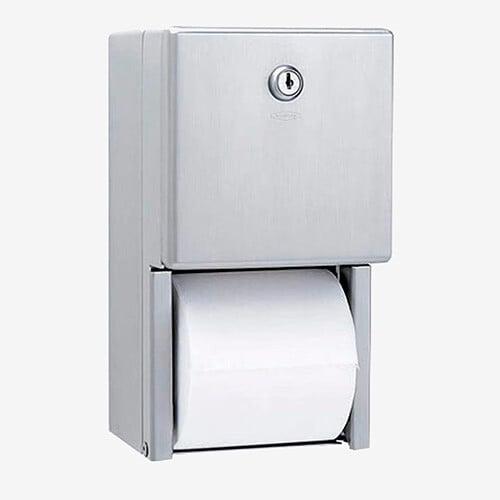
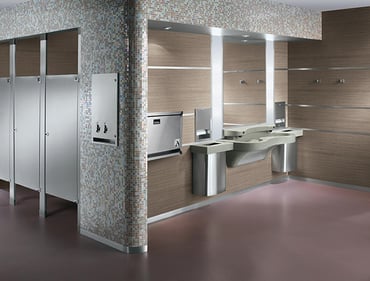 Toilet Paper Dispensers = New partitions + beat-up dispensers =restroom still looks unfinished.
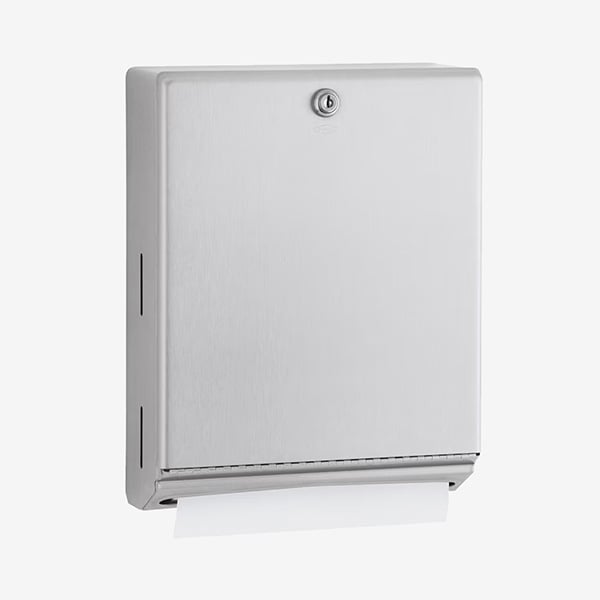
- Paper Towel Dispensers = Common companion scope item in restroom refreshes.
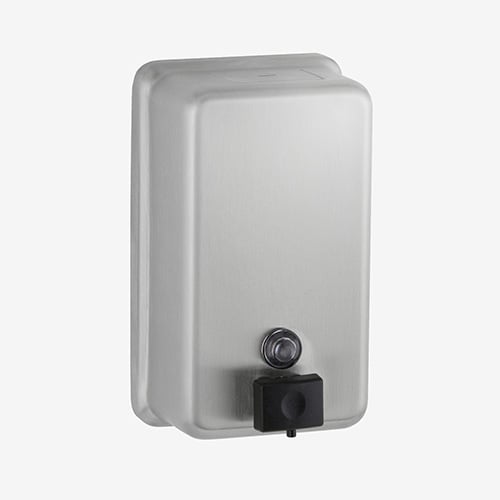
- Soap Dispensers & Parts = Easy, reliable, and aesthetically pleasing wins.
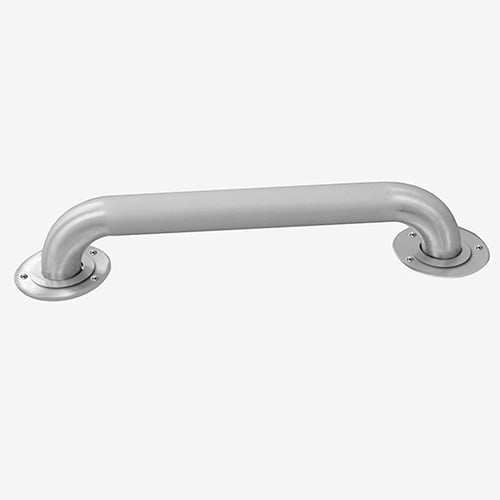
- Grab Bars = Often addressed alongside ADA-driven restroom updates.
- Feminine Hygiene Dispensers & Parts = Natural finishing touch in the ladies' room during a refresh; high visibility.
- Waste Receptacles = Completes the finished look and improves upkeep.
- Partition Accessories = Directly solves common partition complaints.
-
Tips for Preventing Future Restroom Partition Problems
Most partition failures aren’t sudden—they’re gradual. A simple, consistent maintenance routine can prevent callbacks, complaints, and premature replacements. Here are practical steps you can implement:
-
- Tighten hardware regularly (hinges, brackets, latches) to prevent sagging doors.
- Fix door misalignment early to avoid stress on hinges and pilasters.
- Replace worn latches and hinges before they cause panel damage.
- Install door stops and bumpers to reduce impact damage and noise.
- Protect high-impact areas with stainless steel shoes or edge guards.
- Address moisture issues around floor anchors and caulking promptly.
A little attention over time prevents most partition failures. The goal isn’t constant repair—it’s early correction before small wear turns into structural damage.
 How The Part Works Supports Quick and Effective Repairs and Installs
When you’re trying to keep a building open, the real bottleneck usually isn’t labor—it’s identifying the right parts and getting them quickly.
For Repairs: The fastest solution is accurate part matching. Shop by part category or use Text-A-Tech. Send us a photo of the part along with a brief description of the issue, and our team will help identify and source the correct replacement fast.
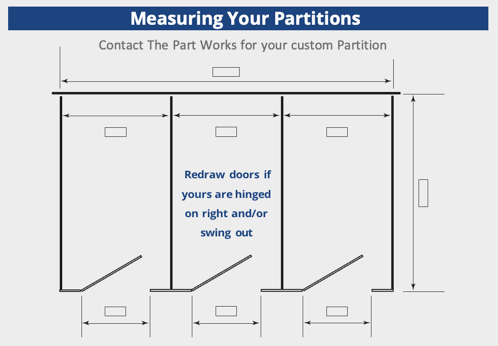
For Complete Partition Replacement: Start with clear specifications—dimensions, mounting style, panel heights, and material—to ensure accurate quotes and smooth installation. Need help measuring and drawing your stalls? We can help with that, too.